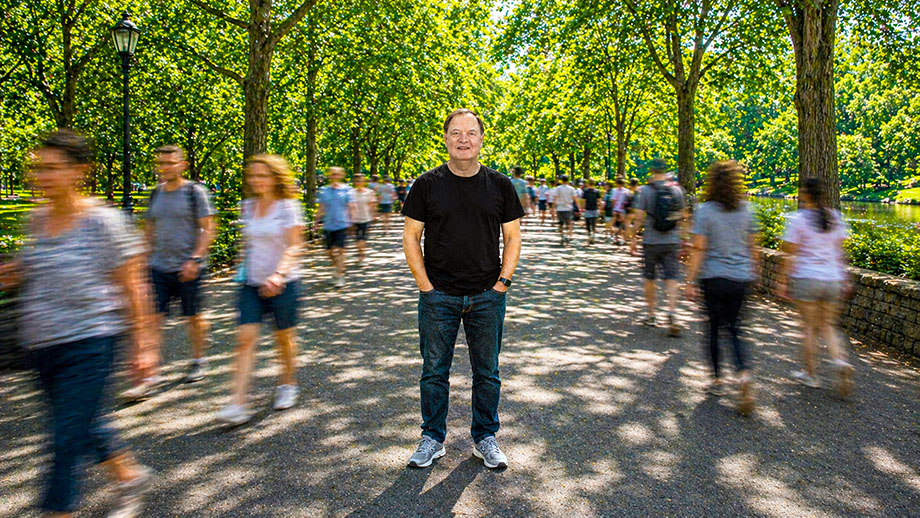
I stood in a park near my house the other day and watched people.
It was a normal scene. The new leaves of spring made the trees look green. The light came through in soft patches. People moved in both directions — talking, laughing, walking with purpose. Nothing about it would have caught anyone’s attention.
I was standing right in the middle of it.
I wasn’t pushed aside. Wasn’t ignored. Certainly wasn’t rejected.
But I didn’t feel part of the scene. I didn’t feel like those people. I somehow wasn’t one of them.
I could hear pieces of conversations as people walked past. I could tell who was relaxed and who was distracted and who was in a hurry. There was nothing unfamiliar about what I was seeing.
It felt like a scene that I was close enough to recognize, but not close enough to step into. I didn’t know how to belong there.
When I was younger, I would have reacted to that feeling differently. I would have felt some combination of frustration and anger. I would have assumed something needed to be fixed — either in me or in the world around me.
I would have tried to close the gap. I don’t feel that way anymore.
 Why is it ‘isolationism’ to oppose killing those who didn’t attack us?
 I want my children surrounded by tools of creation, not consumption
 If you cherish the things you love, never take loved ones for granted
 Nelson Mandela overcame anger at oppression to become a wise hero
 Forgiveness has more power than political agenda in hateful tragedy
 We can’t really change people, even if they offer us the control
 ‘Vast military-industrial complex’ keeps growing and keeps killing
 It’s official: U.S. government debt no longer gets top rating from S&P
 A sincere apology can bring color back when the world looks gray